
Color psychology, built into every page
Coloring Books That Use Color Psychology for Mood (Not Just Pretty Pages)
Yes, they exist. Balanced by Design™ coloring books from Reset & Reflect Press™ are built around color psychology and how your brain responds to structure. The Mood Series helps you color for how you want to feel. The Brain Series helps you color for how your brain wants to work, like focus or motivation. Research suggests structured coloring can ease anxiety and that people link colors with emotions in similar ways across cultures. The effects depend on context, so we design for them on purpose instead of promising them.
Unclench your jaw and let your shoulders drop an inch. Now look at whatever’s in front of you and pick out one color you like.
If you’ve ever opened a coloring book on a frazzled night and noticed your brain finally stopped narrating, you’re not imagining it. Your hands had a job, your eyes had a boundary, and the background narrator in your head lost the mic for a minute.
Most coloring books stop there. Pretty pages, pick any pencil, good luck. We wanted to go one step further and ask what happens if the colors you reach for, and the shapes you fill, are chosen to steer you toward a specific state. Calmer. Clearer. Ready to move.
That’s the idea behind every Balanced by Design coloring book. Here’s what the science supports, what it doesn’t, and how to pick the book that fits the kind of day you’re having.
Does Color Psychology Actually Work?
There’s real research on color and emotion, and it’s younger and messier than most “color therapy” posts admit. People in 30 countries link colors with feelings in surprisingly similar ways (Jonauskaite et al., 2020), but the effects are small and shift with context, so color works best as a nudge you use on purpose.
Structure matters as much as color. In an early study, students who colored a mandala or a plaid pattern after a stressful task had lower anxiety afterward, while free drawing on a blank page didn’t help the same way (Curry & Kasser, 2005, Art Therapy). The authors suggested that a structured, complex design gives a busy mind something steady to hold onto. A later replication found mandala coloring beat both plaid and blank-page drawing (van der Vennet & Serice, 2012).
How you color changes the effect. In a 2018 experiment, mandala coloring paired with spoken mindfulness guidance lowered anxiety more than coloring alone (Mantzios & Giannou, 2018, Frontiers in Psychology). Attention and intention are part of the tool, not extras.
Nerd Note from Ki: That’s your amygdala, by the way, the overzealous security guard on your brain’s main floor. A clear shape with clear edges tells it nothing needs scanning right now. Your thinking brain gets a chance to come back online.
How Balanced by Design Uses Color Psychology
Color isn’t decoration here. It’s direction for your brain. Every book and page starts from one of three palettes, each a set of colors chosen to steer you toward a specific state.
| Palette | Use it when you feel | Designed to help you | Colors |
|---|---|---|---|
| Calm | Wired, tense, braced for the next thing | Downshift so your nervous system gets to rest | Misty blue and sage, steadied by celadon and sand |
| Clarity | Foggy, scattered, tabs open everywhere | Get your thinking organized without revving up | Slate blue and pale aqua, with silver gray and soft beige |
| Energy | Flat, stuck, running on fumes | Find momentum without the crash | Apricot and soft coral, grounded by golden amber and cocoa |
Each palette has a neutral tone built in, so no color gets loud enough to hijack the mood. Calm leaves out saturated teals and stark white. Energy leaves out true red and neon orange, because you want to get moving, not get rattled.
Two series, two jobs
The Mood Series is for coloring the way you want to feel. You’ll find familiar scenes and recognizable themes built on a steady rhythm. It’s regulation through rhythm and stability, not just soft colors.
The Brain Series is for coloring the way your brain wants to work. Each book supports the brain function in its title, like focus or motivation, through form, structure, and how complex the pages get.
Both series sit on The Breakaway Method™, the brain-based model behind every Balanced by Design book.
In both series, pages move from big, easy zones you can finish fast to richer pages that reward attention, with a few standout pages along the way. Every page mixes big fills, medium zones, and small accents, with clean closed shapes and no filler confetti. There are no quote pages and no written prompts, so you color without a lecture. A few pages come with a little attitude, because a reset should be fun.
Pick a Coloring Book for How You Want to Feel
Start with the feeling you want more of, not the one you’re stuck in. Every button goes to Amazon, where you can look inside.
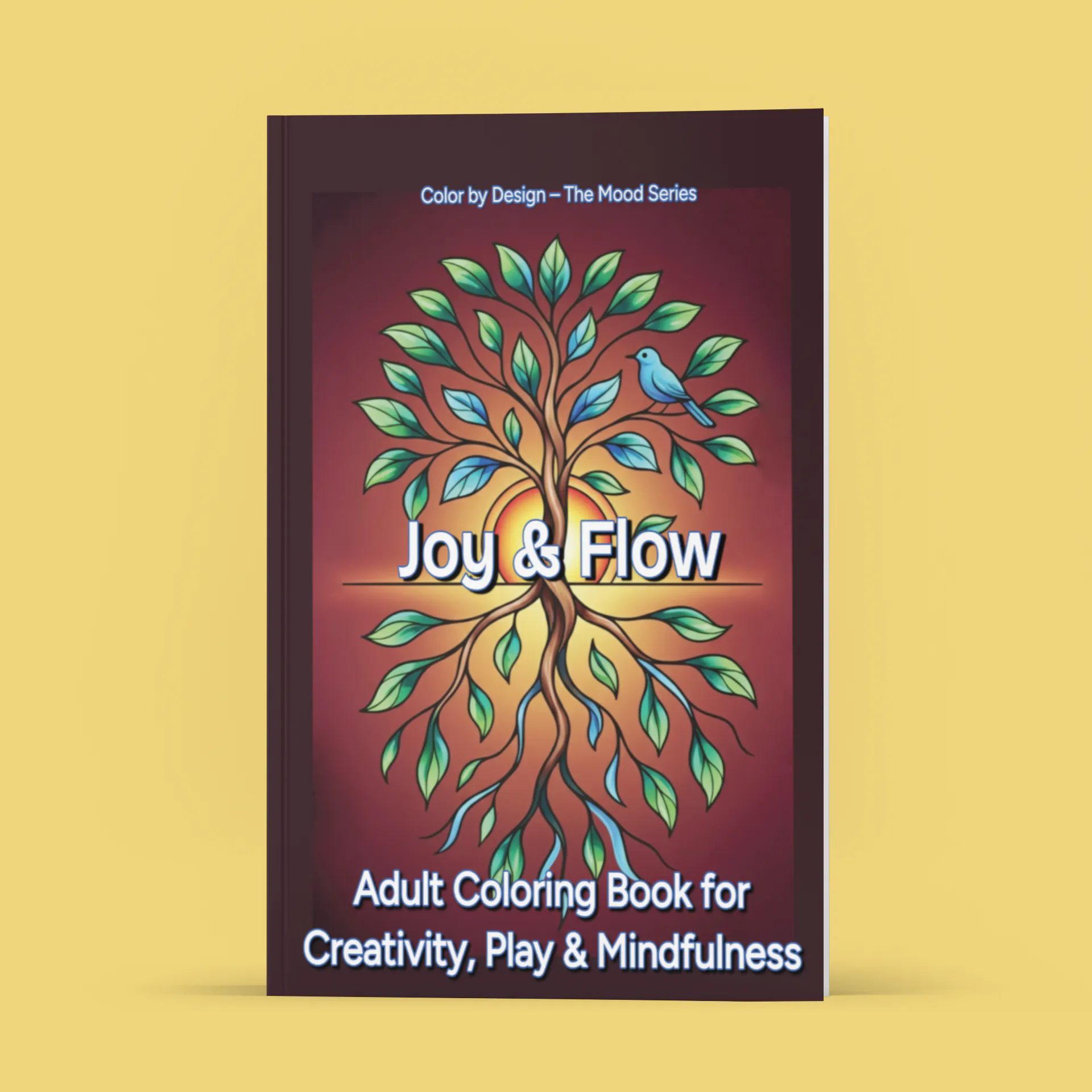
Want: lighter, more joy
Joy & Flow
Mood Series · all year
Playful, rhythmic designs that help you shake off stress and remember what fun feels like.
See Joy & Flow on Amazon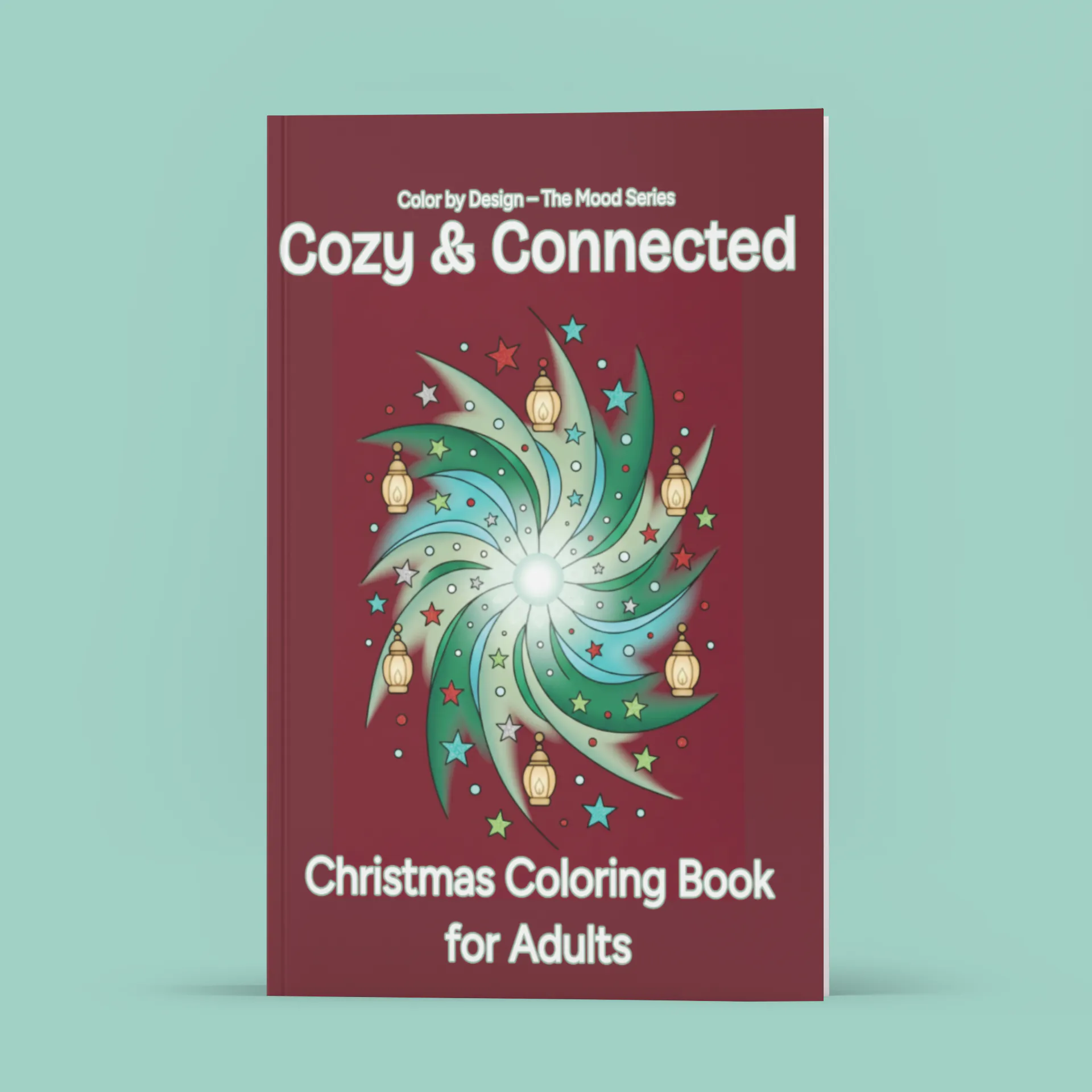
Want: warm and connected
Cozy & Connected
Mood Series · Christmas
Cozy holiday scenes with a little humor, for when the season gets loud.
See Cozy & Connected on Amazon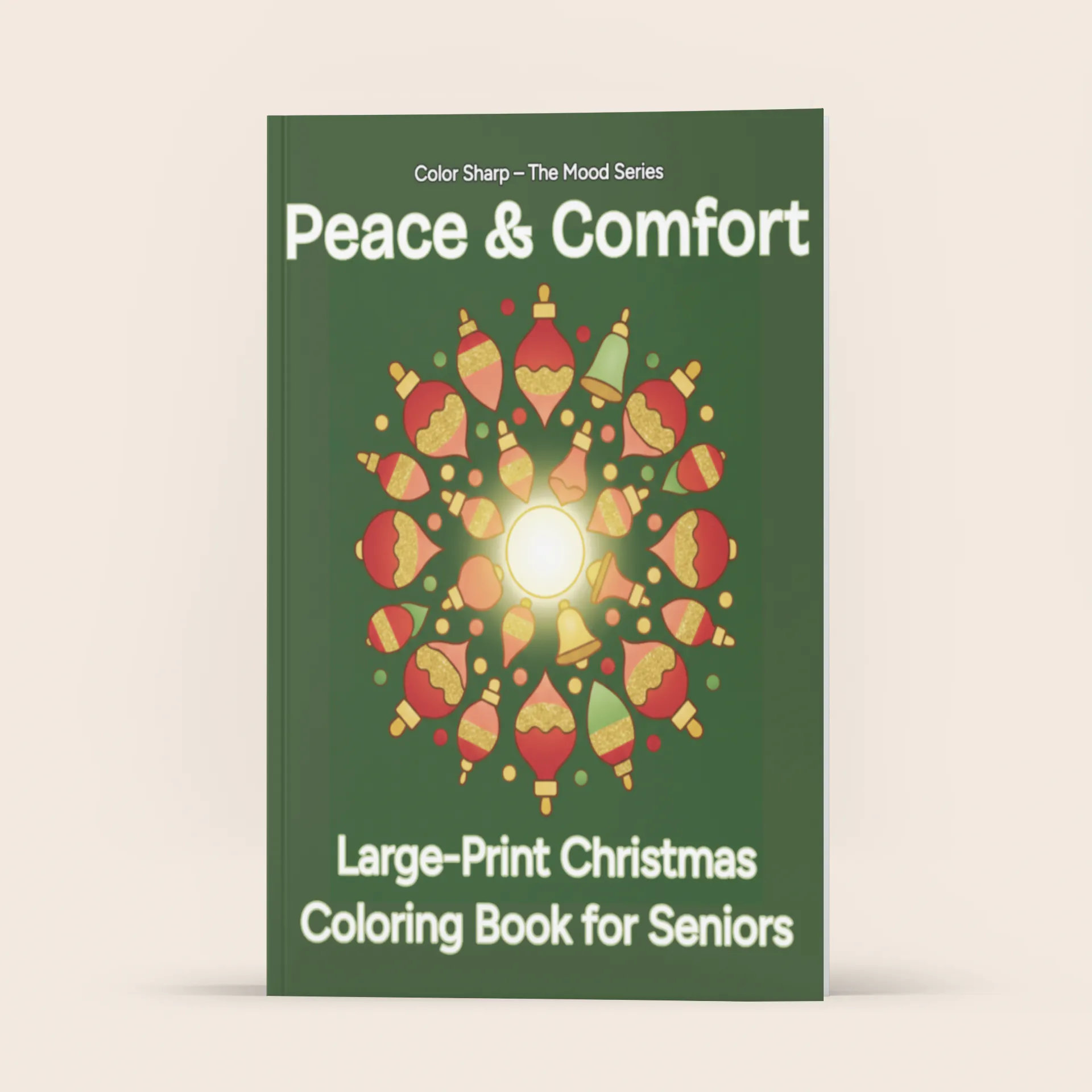
Want: comforted, easy on the eyes
Peace & Comfort
Mood Series · large print · Christmas
Big shapes and bold lines for easy grip and zero strain. A thoughtful gift for a parent or grandparent.
See Peace & Comfort on Amazon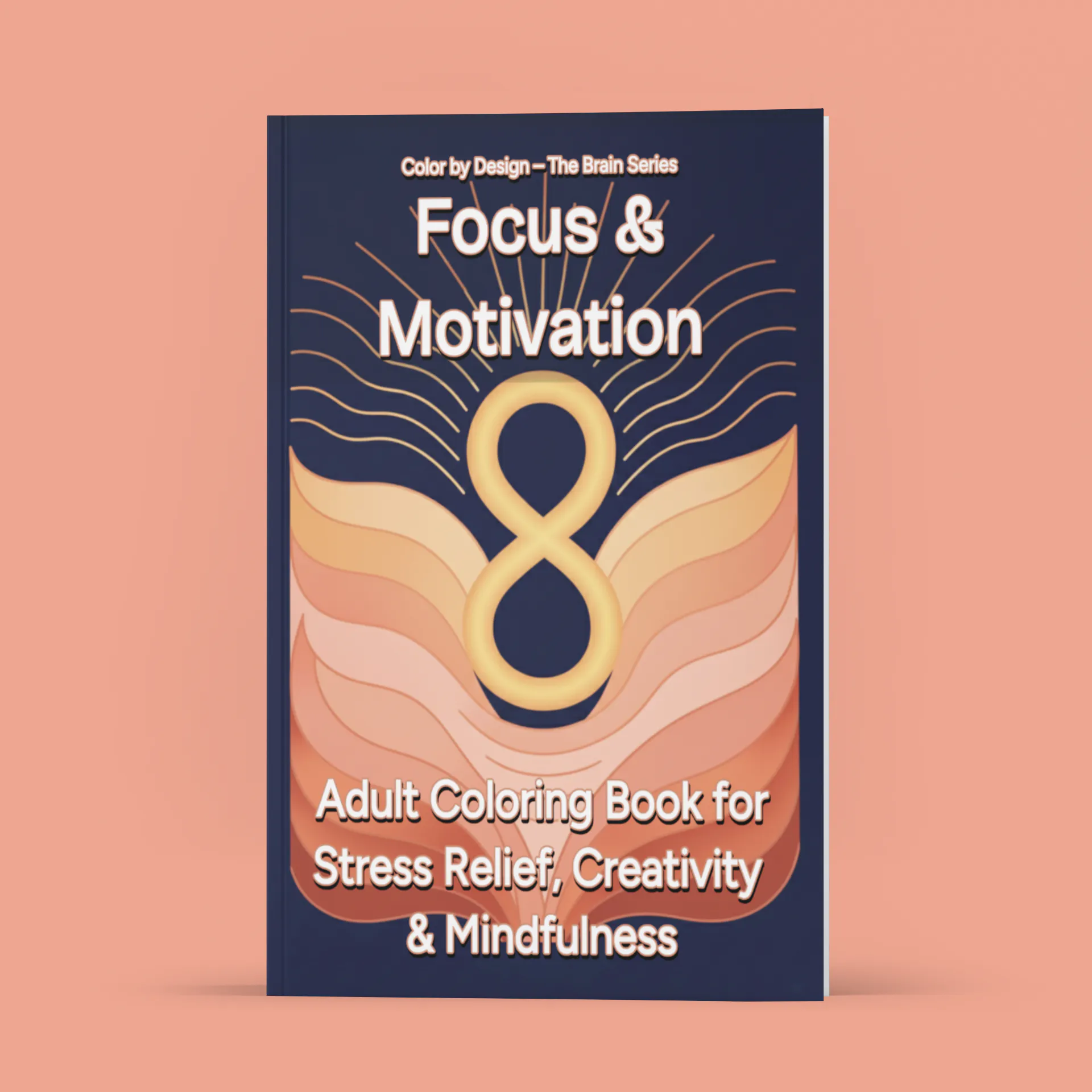
Want: focused and moving
Focus & Motivation
Brain Series
For stalled projects and “I’ll start tomorrow” days. Motivation that feels steady, not manic.
See Focus & Motivation on Amazon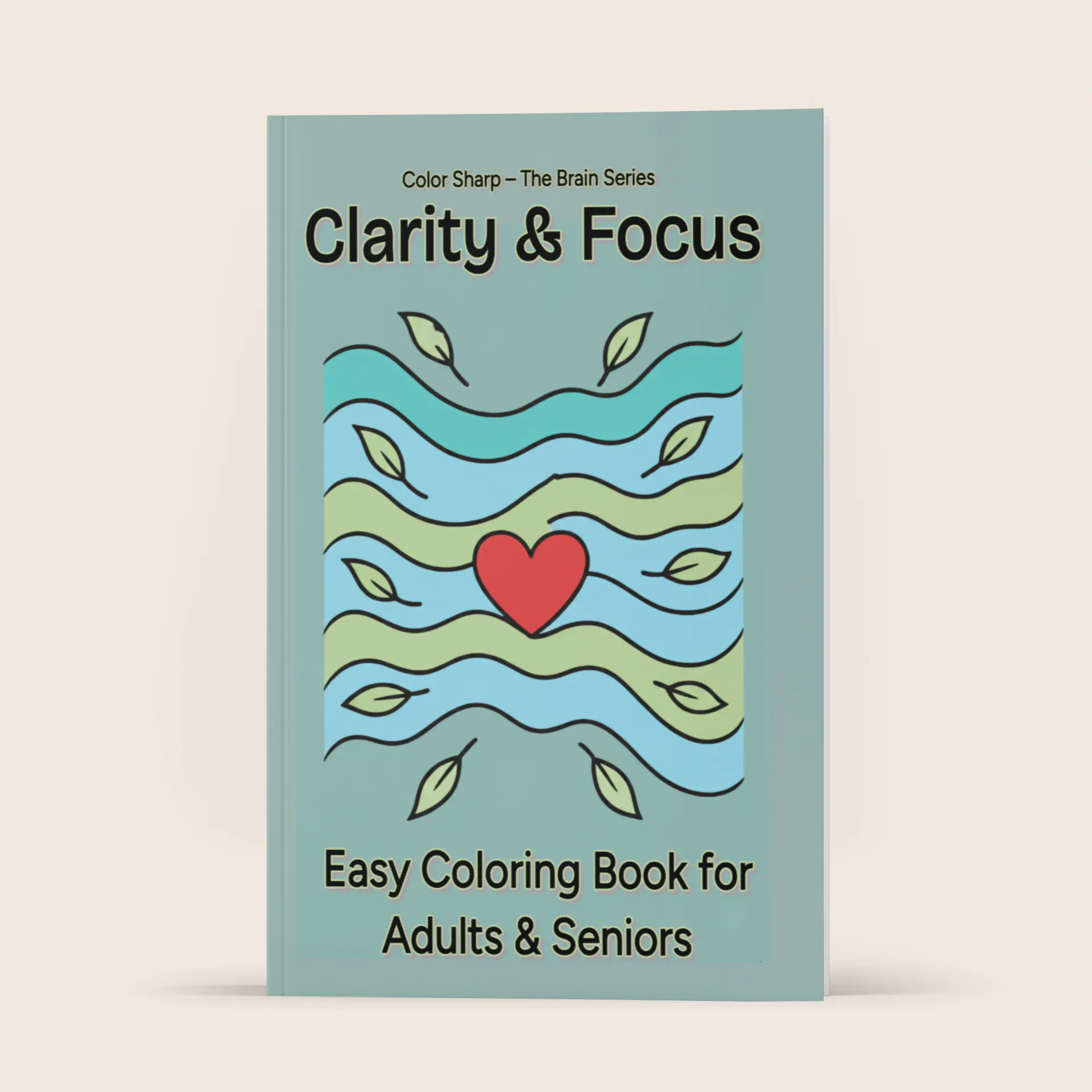
Want: clear-headed, no strain
Clarity & Focus
Brain Series · easy pages for adults & seniors
Clean, satisfying designs that give your brain a gentle workout without the overwhelm.
See Clarity & Focus on Amazon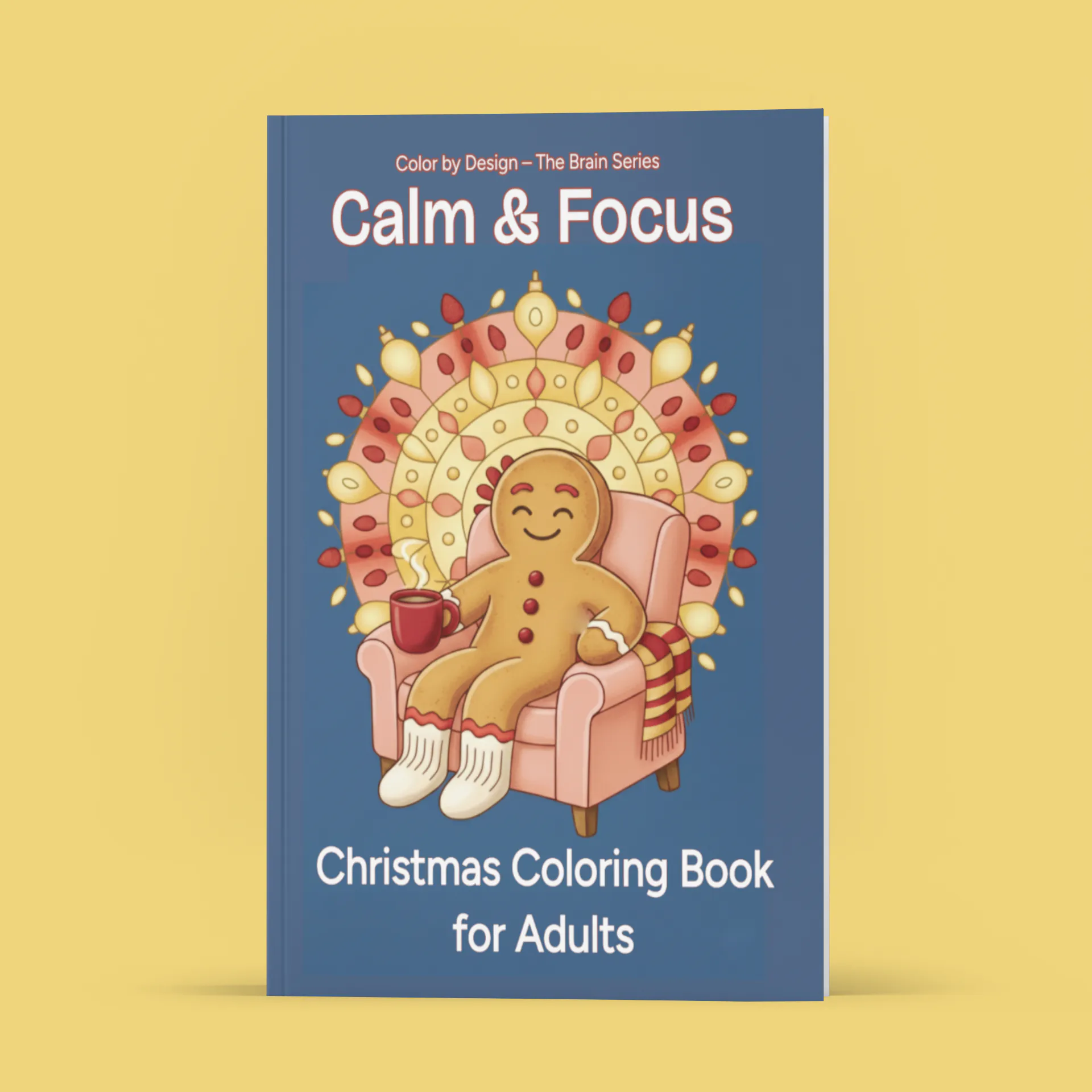
Want: calm and focused
Calm & Focus
Brain Series · Christmas · geometric
Festive doesn’t have to mean frantic. Structured patterns for late-night decompression.
See Calm & Focus on AmazonWant the why behind it? Balanced by Design: Permission Granted to Un-Hot-Mess Your Brain is the 191-page workbook the whole system grew out of, with brain regions, color cues, and resets you can actually use. Get the workbook on Amazon or look inside first.
You don’t need the perfect book. Pick the one that matches what today needs, color one page, and see how your body responds.
Try It: A 10-Minute Color Reset With Any Page
You can do this with one of our books or whatever coloring page you have handy. The research suggests the intention matters, so this sets one before you start.
- Name your state. Pick the word that fits right now: wired, foggy, or flat.
- Choose the palette for where you want to go. Wired, reach for Calm blues and greens. Foggy, try Clarity slate and aqua. Flat, pick Energy apricot and amber. Keep one neutral pencil nearby to steady the mix.
- Start with the big shapes. Fill one large zone first. A fast win tells your brain the job is doable.
- Breathe with the rhythm. As you color repeating sections, breathe in for 4, hold for 4, and breathe out for 6. When your mind wanders, notice it and come back to the next shape.
- Check in at minute ten. Ask yourself what feels different in your shoulders, jaw, or breath, and choose one small next step for the rest of your day.
Right now it might feel like a lot. Ten minutes from now, there’s a little more room.
Questions People Ask About Color Psychology Coloring Books
Does color actually affect your mood?
Color can nudge mood, but it’s not a switch. People across 30 countries link colors with emotions in similar ways, and context, culture, and personal history still shape the effect. Use color as one cue alongside breathing, posture, and what you’re paying attention to.
Is adult coloring good for anxiety?
Several small studies found that coloring structured designs like mandalas or patterns lowered short-term anxiety more than drawing on a blank page. Coloring is a self-care tool, not a treatment. If anxiety is getting in the way of your life, talk with a health professional.
What’s the difference between the Mood Series and the Brain Series?
The Mood Series is built around the feeling you want, using recognizable themes and steady rhythm. The Brain Series is built around a brain function, like focus or motivation, using structure and a clear progression from easy to complex.
Is this art therapy?
No. Art therapy is guided by a trained therapist. Our books are for education and self-reflection, designed to support a calmer, clearer, or more energized state.
Do I need special pencils or markers?
No. Any set with a few blues, greens, and warm tones will do. If you’re building a set, make sure each of the three palettes is covered, plus a neutral or two.
Who are these books for?
Anyone whose brain runs loud: overthinkers, people who are burned out, and anyone who wants a reset that doesn’t feel like homework. Clarity & Focus and Peace & Comfort are designed with easier, larger pages.
Color on Purpose, Not by Accident
You don’t have to wait until you feel calm to start. Pick one book, one palette, and one page. That’s enough to start feeling a difference tonight.
Pick your bookNot ready to buy? Try the free Color Flow Reset, a 3-step, color-based energy reset you can use anytime your head feels noisy.
Written by Kimber Nelson, iPEC-certified Energy Leadership Index Master Practitioner, neuroscience-based coach, and author of the Balanced by Design workbook. Recovering overthinker and serial tab opener.
Sources
- Jonauskaite, D., et al. (2020). Universal patterns in color-emotion associations are further shaped by linguistic and geographic proximity. Psychological Science, 31(10), 1245–1260. doi.org/10.1177/0956797620948810
- Elliot, A. J. (2015). Color and psychological functioning: A review of theoretical and empirical work. Frontiers in Psychology, 6, 368. PMC4383146
- Curry, N. A., & Kasser, T. (2005). Can coloring mandalas reduce anxiety? Art Therapy, 22(2), 81–85. doi.org/10.1080/07421656.2005.10129441
- van der Vennet, R., & Serice, S. (2012). Can coloring mandalas reduce anxiety? A replication study. Art Therapy. doi.org/10.1080/07421656.2012.680047
- Mantzios, M., & Giannou, K. (2018). When did coloring books become mindful? Frontiers in Psychology, 9, 56. PMC5797627
This content is for education and self-reflection. It isn’t medical or psychological advice, and coloring isn’t a substitute for professional care. Balanced by Design books are designed to support calm, clarity, and energy; individual results vary. Some links are Amazon affiliate links, which means I may earn a small commission at no extra cost to you.